Screening second screen

It is totally hip and happening: second screen. More and more people watch television and use their devices at the same time. But how do those people use that device? And what are the opportunities for producers and advertisers? This is often misjudged.

As creator of a second screen app you should really think about the program that you’re dealing with. Casual programs are perfect for second screen apps, because the attention spans are short and between two spans you can involve your audience . For series with a longer attention span is much harder to create a suitable app that really adds value. That’s why it worked well with The Voice of Holland, but not with Divorce.

The Voice of Holland Thuiscoach vs. Volkswagen Sleutelspel

The Voice of Holland Thuiscoach vs. Volkswagen Sleutelspel

Sitting on the couch watching The Voice of Holland is what a Friday night looks like for many Dutch people. A casual program, of which you don’t necessarily need to see all the episodes to follow it and enjoy it. This is typically a program where a second screen app can work well. The home coach app asks you simple questions: Turn around or not? Who will win the battle? These are questions that you also think about if you are just sitting watching the program, it makes sense. Therefore, there is added value for the viewer and they will feel more involved with the program.

In The Voice of Holland Home Coach app sponsor Vodafone is all over the place, but the content of the program is leading and not the brand. That’s what they did wrong in Keygame. Volkswagen sponsors the new drama series Divorce. In the series almost all the characters drive a Volkswagen. Now ACHTUNG! created a second screen game about this fact. If the app calls the key alarm you need to search for a Volkwagen key on TV. You could grab those keys within the app to win a car. It is very simple, but quite annoying, because once that alarm started ringing I couldn’t follow the story anymore. And that is why I was watching TV initially. After 5 keys (all of which did not fit) I called it a day.

This year we also saw the second screen addition to The Mole. I was happy because this could make my favorite program even more enjoyable. At least I thought so. I let my imagination flow. Can I now keep my own diary, designate hints, mark suspicious moments and share it with my friends …? No. So, what can you do on live.avro.nl? Answer a few questions and pick your mole… Ok, it’s pretty nice to know what percentage of Dutch people agree with me, but do I necessarily have to know that  during broadcast? As a true The Mole lover I’d rather just watch. The preview and review are nice, but on these moments your second screen gets promoted to the first place.

There is so much to learn and to try and I hope that the end user is considered more important. I wonder what the next second screen apps will bring us, keep you posted.

Posted in Opinion | Tagged , , , , , , , , , , , | Leave a comment

NO becomes NOW! Creative bootcamp

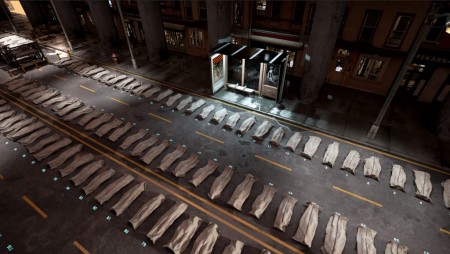
NO filmposter

NO filmposter

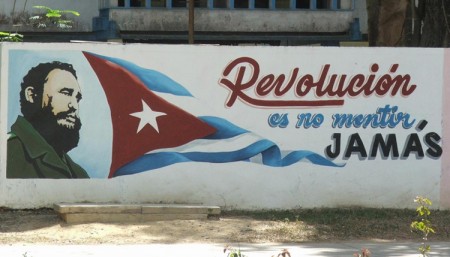
Chile, 1988. Years of oppression under the regime of Pinochet. The man responsible for killings, torture, disappearances and financial malpractice. Pressured by internationale politics, he scheduled a referendum. Vote SI to agree that Pinochet remains the political leader, vote NO for change.

The film NO is about this age in Chilean history. Advertising talent Rene Saavedra is asked to lead the NO campaign. And that is a challenge to say the least. Many Chileans think SI will win by corruption. Others are afraid to vote. Saavedra tries to awaken his compatriots with optimistic and surprising television.

Now this is what we call a life-changing campaign, one that really matters. Spektor Storytelling, FilmFreaks and BKB are inspired by it and together they have organized a bootcamp: NO(W).

50 creative minds from different fields of interest were invited to this special evening in Ostadetheater in Amsterdam. After an inspiration session with BKB about the Movember campaign we were divided into teams to come up with our own campaign. A campaign that could change the world (or a part of it). What do we want? Social change. When do we want it? NOW.

At the end of that long, but very inspiring evening everybody showed their concepts. We have seen concepts for: More silence, More listening, More local initiatives, No more rushing and No more individualization.

Soon all the ideas will be published in the official NO(W) bootcamp newspaper and on the website of the initiative. A selected jury will choose the winner. If the film NO attracts enough visitors, then we will actually be able to realize this campaign. So go the movie theatres everybody, then we can change the world!

NO runs in the Dutch movie theaters from January 31st. The combination of original footage and the new images that are shot on U-matic, makes the movie take you back in time.  NO was selected for the Quinzaine des Réalisateurs in Cannes, won the Art Cinema Award and is also nominated for an Oscar.

Posted in Opinion | Tagged , , , , , , , , , , , , , , , , | Leave a comment

The Zappendael Case, interactive detective

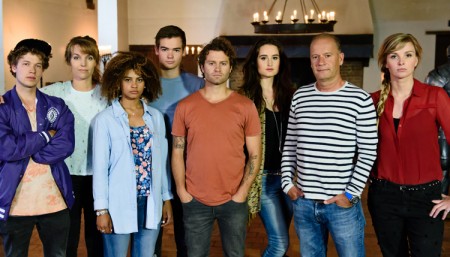
During a secret dinner on Zappendael estate Tim Douwsma drops down dead. His soup turns out to be poisoned. This is the beginning of The Zappendael Case, a classic whodunit with a modern twist. Viewers can join the online search. Who killed Tim? The game is on.

There were ten other zapp-presenters who attended the dinner. One of them must have killed Tim Douwsma. Count Titus wants no police on his estate, so we must solve the case ourselves. Whoever proves not to be the offender may go home. This leaves fewer suspects every week. But the Count and his cook Klaar are also behaving quite strange, maybe they have something to do with Tim’s death.

Every Tuesday, Thursday and Saturday a piece of the story is shown on television, but the interaction starts with the online game. On www.zappendael.nl players can take a look at the estate. By answering questions and solving puzzles they can gather more evidence about the case. This includes videos, pictures and sound recordings. You can also specify who you suspect every week and who you think is undoubtedly innocent.

There are also a number of other storylines that raise questions. Why won’t the count let police on his estate? And why is there a bloody sweater in his barn? Who taught Jean-Baptiste, Klaar’s parrot, all those weird messages? And where did the corpse of Tim go? Did he rise from the dead or is he secretly alive ?

The combination of television and Cluedo is not entirely new, but I think the NCRV has made The Zappendael Case a very good project. It is the first time that they made such a large transmedia concept for kids. The story is very well written and it continues to be exciting until the very end. On the website children speculate a lot: “It’s Sascha Visser. I always knew something was not right with him. You see in the first episode that Sascha gets no invitation and he was shocked when he heard that Tim was still alive. That’s very suspicious.” But Checkpoint’s Klaas van Kluistrum is also still a suspect: “It’s Klaas, everybody can see that. He was in the herb-garden and he said: ”I didn’t want to kill you.”” You can see that the story is very much alive with the audience and that they try to find out the truth together.

Here and there I see a few thing that could be improved. The puzzles on the site are not very distinctive. This really should be more innovative. As you often see with this kind of transmedia projects it’s always a game of memory, a slide puzzle or a simple multiple choice question. Even though the crucial moments when someone can prove his innocence, are very suitable for participation. For example, there is a moment in which the fingerprints of the suspects must be compared with that of the perpetrator. This would have been a really nice job for the players, but unfortunately the answer is given by Count Titus in the same episode.

I also think that the interaction design of the website can be improved a lot. It is difficult to understand in what order you should view things, revealing information too early. However, not all the pieces are in place yet and it is not yet sure how it plays out. Nine presenters already left Zappendael estate. Sascha, Klaas, Titus and Klaar are still there. Who killed Tim? The exciting denouement of the murder mystery will be revealed in Zapp Live next Saturday.

Posted in Cases | Tagged , , , , , , , , , , | Leave a comment

How do they do it? part 2/2

He produced Where’s Gary? and The Spiral. And although he prefers not to use the word transmedia I still see Peter de Maegd as one of the few true transmedia producers. He himself would rather talk about ‘storytelling for the converged media’. For me it does not matter what you call it, because we are still talking about the same buzz-thing . A buzz-thing that is being reviewed more critically nowadays. On How do you do? Peter de Maegd told us about his learnings of the pan-European project, the Spiral.

Above you can see the trailer of the Spiral. 6 pieces of art, 6 museums, 6 countries. But also project of 6 million euros. The money came from several sources with different goals. Thus 90% of the budget went to the television series and the rest was for the game and live events. On television the Spiral had 2.5 million viewers, a small 143,000 people have visited the website www.thespiral.eu. Nearly 95% of viewers has seen nothing of the converged media. Why is that?

What the creators of the series see as the major mistake is that they didn’t want to communicate about the story, but only from within the story. That’s why they have probably missed a lot of publicity and it turned that it was not necessary. People can easily switch between real life and fiction, and they want to that. The example that de Maegd gave was a child who plays a cowboy and goes horse riding on a chair. He knows perfectly well that the chair is a chair, but at that moment it is a horse to him.

I think the lack of players was a result of something else. On television it was not quite clear what you could do on the website and why you should go there. Moreover, the game was no fun. I understand that they tried to do something different than the classic search quest, wherein the active players pave the way for the rest. It was a platform where everyone could contribute, but the added value of this was unclear. You had to do useless things for useless points. You did not get exclusive content or information, and you did not know what you were doing.

In the Spiral it all about co-creation, everyone is an artist and together we make a great work of art. De Maegd himself has a different opinion about this. Writing a story is an art that needs to be done by experts. He believes that users should never be given the creative leadership of the story, because it will be boring and stupid. “Good storytelling is dictatorship.”

With the Spiral a new step is taken in the development of transmedia storytelling and although it may not have been entirely successful, we can all learn from this.

Also read my article about Karel Vincke from Duval Guillaume Modem and their succesful virals.


Posted in Tips 'n Tricks | Tagged , , , , , , , , , , , , | Leave a comment

How do they do it? part 1/2

Yesterday a whole gang of talents, nerds, speakers and hosts traveled to Ghent for How do you do? Virtual platform invited me to this event, which is part of the Creative Media Days. It was a day full of inspiring work, and the conversations with viral guru Karel Vinck and pan-European producer Peter the Maegd I found the most interesting. Here’s a recap of the first meeting.

Duval Guillaume Modem is one of the few agencies that launched one other succesful viral after another. Videos like Push button to add drama for TNT, 148 bady boys for Carlsberg and recently Unlock the 007 in you for Coca Cola Zero were viewed millions of times. According to managing partner Karel Vinck making virals is creating word of mouth in a digital world. First look for a single minded message, instead of a commercial one. Then you give people a story they want to tell. You wouldn’t tell your friends “Be careful what you share on the Internet”, but you would rather say something like “Facebook is much more dangerous than you think.”

Duval Guillaume has become so experienced with YouTube, that they can tell whether it will be a hit or not in just a few hours. For example, they look at the number of comments. If the video does not provoke reactions, it will never be a viral. It often happens these discussions are about the authenticity of the video. Is it real or not? Are they really random people or are they ‘totally random gap models’? Vinck admits that reality is indeed manipulated. Often they use a combination of actors and people on the street are cast. They need to sign quit claims, so they know they are being filmed. They just don’t know what’s going to happen exactly. Reactions are of course edited in a particular to tell a story. Sometimes a face is blurred while it was not necessary. Just to make people more curious . Hey, that’s this advertising life.

Advertising techniques are also combined with PR techniques. The news quickly spreads via Twitter first. You can give important blogs an exclusive preview, so it’s more likely they are going to write about it. The small blogs will follow their lead. Always aim for the international blogs. Via the large international players it will most definitely come back to -in this case- Belgium. Then the videos appear on Facebook and last but not least in the regular press. Journalists often write an article about it when everyone has already seen it. Nevertheless, they provide even more views.

It looks like a piece of cake, a viral, but not everyone can make it happen. The image of Duval Guillaume has undoubtedly helped them with the success of the latest videos. In the Global Viral Video Chart Top 100 of all time they are at # 2, # 29 and # 100. Nice!

Want more How do you do? And do you want to know Peter de Maegd’s learnings from The Spiral? Keep an eye on my blog.


Posted in Tips 'n Tricks | Tagged , , , , , , , , , , , | Leave a comment

Pushed into the rabbit hole

Friction?

In transmedia storytelling the viewers are expected to jump into the rabbit hole. They often have to switch between different channels. Cases show that at these switch points many people drop out or stay at one channel. Your audience will decrease with every switch, because there’s too big a difference between the two channels. I would like to take a closer look at this problem, also known as friction. How can we minimize the friction in our projects? Can’t we push our audience into the rabbit hole?

Jump into the rabbit hole

Jump into the rabbit hole

Where to start?

A good start is half the work. When you start with a large group of viewers more people remain after a switch. Television has a huge range and ensures a guaranteed audience, it is a push medium that you will always be happy to have. Unfortunately it is not always possible to get your story on the air.

Internet can provide more viewers, but only if your story goes viral. Not a big chance. There is so much online content that it is extremely difficult to attract attention. Do not wait until you target discovers your content. Instead, bring your story to places (communities and websites) where the audience already is. This research is really worth the time. The threshold to participate is very low. Another advantage of online video instead of television is that it’s only a small step to other online content. So, with television coverage you instantly reach a large group of people, but with online video, the percentage of people that really dive into the experience is probably higher.

How do you get people to go to other channels?

Of course, not everyone is equally active with a story. But how do you ensure that many people want to be active? Whoever is looking for more content needs to see that this is an enrichment of the story. That it adds value. If you want your audience to actively participate, you must earn it. You must stick to your promises. And the more you give, the more you can ask.

In addition, the switch between two channels must be smooth and you must reward your audience for their switch. Give people the opportunity to share this with others. There can be some challenges along the way, but it must feel like the end of one chapter is the start of another. It is very important to realize that different types of media are consumed in different ways.

Lean forward vs. Lean back

Imagine: You are sitting on your big comfy chair reading a great novel with a big mug of hot tea in your hand . Halfway through the chapter there’s a URL of where you can unlock a very important video. Not really what you were waiting for at the moment. You have set your mind to reading. The sudden switch between lean back and lean forward  is an issuefor most people, because it does not meet their expectations.

When you are actively surfing around, you’ve got a short attention span of no more than a few minutes. At that moment, nobody is going to watch a stream of an hour, or read a largepiece of text. It’d be better to slice the content in small, bite-sized pieces. In the middle of an exciting game there’s no place for videos. These are preferably skipped and just feel like an annoying interruption. Casual programs have shorter tension curves and are therefore very suitable for the use of a second screen. But during a good drama series, you don’t want to be distracted at all.  Don’t interrupt these (rare) long attention span for a short pieces of additional content. Afterwards is early enough.

So?

When people expect to do a particular act, they are in a certain mode. Be aware of which mode your audience is in. At any moment in your story. Work in sections, with packets of content that go well together. Ensure that your give feed forward, so people know where they stand. How long is this video and what do we do next? What happens on that other channel when I go there? What do I get when I finish this level? So: be crystal clear and honest for the smoothest experience!


Posted in Uncategorized | Leave a comment

Oh Oh Transmedia

On Twitter I was asked if if there’s a good example of how Reality TV can go transmedial… Well, @j_stankevicius, that is an interesting question. To be honest I didn’t know the answer right away, so I checked all the cases that I’ve studied and I couldn’t find one that was developed around reality TV.

But when I thought of it, it made me think that actually a lot of reality series use different storylines on different channels. Look at Oh Oh Cherso, a realityshow about eight young adults from The Hague who go to Chersonissos to party. I guess you could say it’s the Dutch version of Jersey Shore.

Oh oh Cherso

Oh Oh Cherso

The youngsters, who don’t know each other very well, have to live in a house together and drink and party all night long. Of course there are lots of stories to be told there. It was a big success with over a million viewers every week. So we followed the group on a ski-holiday as well: Oh oh Tirol and on another summer holiday to sunny Greece.

Oh oh Cherso is everywhere: the group brought out a few singles, there’s merchandising, they tour around the country to visit different clubs. The characters are spoofed in comedy shows, which means the audience is really engaged. For the second summer season there was even a show about the auditions to find two new members of the Oh oh group. This series was called X Cherso and made it possible for fans to become part of the show.

Throughout the seasons we got to know the characters and their personal storylines as well. One of them: DJ Tony Star (aka Sterretje) was always a happy single, but he seems to be ready for a relationship now. So after the second season he got his own reality datingshow: In love with Sterretje. Tony’s twitter account got up to 38 thousand followers and he travels to Chersonissos regularly to turn up the beat at the hottest parties.


DJ Tony Star

DJ Tony Star

And that’s just one member of the gang. Samantha, better known as Barbie, also got two spin-offs on television: Barbie’s Wedding and Barbie’s Baby. She keeps her fans posted on this webcommunity called Hyves. Roos and Bibi participated against other celebrities in the Dutch show Echte meisjes op zoek naar zichzelf.

This is only one example, but I’m convinced that there are far more reality shows that work this way. Reality TV characters jump from one show into another and their stories are told in all these different channels, on television and online. Look at celebrities such as Britt Dekker, Michella Kox and the twins Erik and Arjan Snippe. I don’t know if transmedia is the right word for it, but these people sure tell complementary storylines in various places.

Posted in Cases, Transmedia theory | Tagged , , , , , , , , , , , , , , , | Leave a comment

Tim is a fox

Sorry, this entry is only available in Nederlands.

Posted in Cases, Opinion | Tagged , , , , , , , , , , , , , , , | Leave a comment

Llow branding, high impact

The past weekend thousands of people traveled to Biddinghuizen for the highlight of the Dutch festivalseason: Lowlands. It was the first time I went there, and ofcourse I enjoyed the music, but I also liked the activities that were organised by brands. Festivals such as Lowlands are ideal to show your brand identity to a of lot people. I’ll give you three examples:

1. The Converse Compound is at Lowlands for the fifth year, because Allstars are the ultimate festivalshoes. It is a beautiful construction made out of pallets and containers. Bring your Chuck Taylors or other Converse models to one of the containers and they will be customizes by the artists of LEYP, for free. If you’d rather upgrade your whole look you can get bombarded with paint and glitters by Saskia Rocks, awesome! You can also pimp t-shirts and bags yourself, take a picture with your festivalbuds in the photobooth or leave a mesasge at the converse wall. Everything is sharable with the hashtag #showmeyours. These photo’s are printed and sticked to the compound. Converse also developed the Lowlands App in which you can make your personal blockschedule. Too bad they didn’t implement their own silent disco.

Converse Compound

Show me yours @ Lowlands (foto's: Daily Paradise)


2. Grolsh, the sponsor with it’s own tent, also came up with something cool. For a little refreshment with these tropical temperatures the Grolsch bar was replaced by the Grolsch pool. The pool is no more than an overgrown footbath, but it’s complete with lifeguards, aquarobics and diving prohibited-signs. Grolsch also made a game with QR-codes, but I’m afraid that’s not going to work as long as we haven’t solved the phone-charging-problem. Much simpler was the free Grolsch cooling service, where you could trade your tepid beer for a cold one. Tastes better and no apps needed.

Beugelbad

Aquarobics in het Grolsch pierenbad (foto: Daily Paradise)

3. Oxfam Novib made sure thet 55.000 people now know what it feels like to wait for drinkable water in the burning sun for half an hour. O no, that was mother nature.
Oxfam Novib showed people their own flaws with their All You Can Eat foodcorner. Because while 1 in 7 people goes to bed hungry every single night, the All You Can Eat restaurants pop up all around the world.
The signs in the foodcourt are saying things as: There’s no more where that came from and Eat now, pay later. B Visitors can try to bring down the system by hitting a bunch of cans. Afterwards they can enjoy the fair and sustainable snacks.

All You Can Eat

Oxfam Novib's All You Can Eat

As you can a see a nice idea and a bit of attention can provide a huge brand awareness. Before Lowlands I had no clue what Oxfam Novib was fighting for. Other brands that are visibly active and add value at Lowlands are Hi, Douwe Egberts and Shoestring. I can’t wait to see what they all come up with next year.

Posted in Cases, Didi Koller, Marketing snippets | Tagged , , , , , , , , , , , | 2 Comments

The Tweeting Director

On Monday, August 6 Dutch people get the chance to direct the thriller: ‘Onder Controle’. Through Twitter you can indicate live directions to the actors. Holland’s best actors will play a role, including Tygo Gernandt, Hanna Verboom and Halina Reijn.

The film will be used as a promotion for the Dutch Film Festival. A festival that is fun for everyone. In order to emphasize that everyone can also interfere with the film. You can both watch and follow the movie on monday at 18:30 on www.filmfestival.nl and UPC Channel 12. Use the hashtag # nff2012 to provide guidance and who knows, your name might be in the credits at the end.

Just like last year the campaign is made by Woedend! in cooperation with WE film. In 2011 this resulted in an innovative and interactive video, check the making of:

Posted in Cases, Didi Koller | Tagged , , , , , , , | Leave a comment